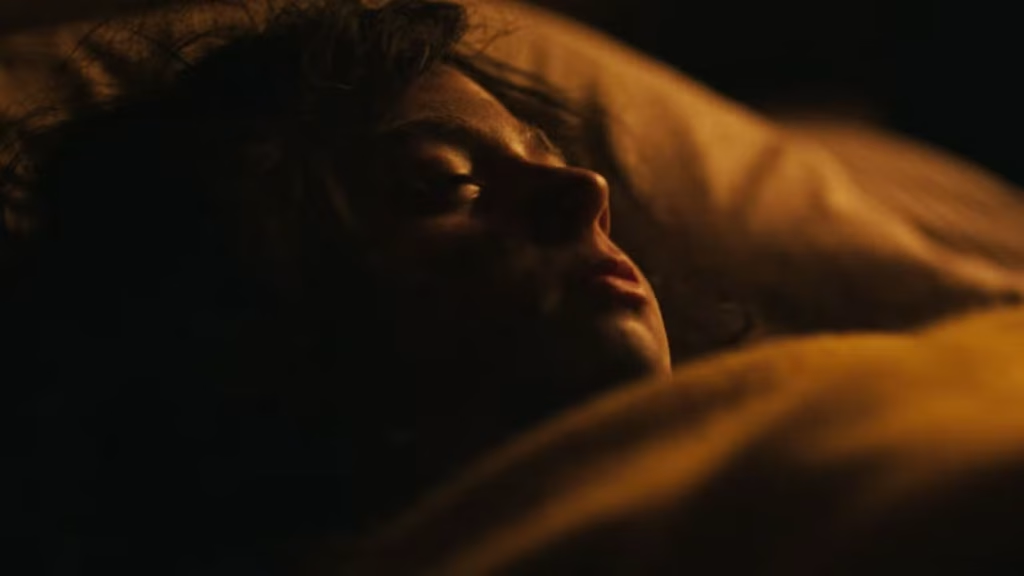
One of the strangest and most haunting parts of Train Dreams arrives with the wolf girl. By that point, the film has already trained us to live inside Robert Grainier’s loneliness and grief. So when this almost mythic figure appears, the movie clearly wants us to feel a little unsteady. Are we seeing something that is literally happening? Or are we watching Robert reach for meaning in the only way he can?
The smart answer is that the wolf girl works on both levels. Train Dreams is not the kind of film that loves neat, locked-box explanations. It is more interested in the weird ways people keep the dead alive in their minds. The wolf girl matters because she sits right at the crossroads of those ideas.
The Wolf Girl Appears When Robert Is Most Emotionally Exposed
Robert has already spent much of the film being carried forward by labor, routine, and silence. He works, he endures, he keeps moving. Even when tragedy tears through his life, he does not turn into a man who explains himself. He internalizes everything. That is part of what makes Joel Edgerton’s performance so affecting. You can feel whole emotional storms passing across his face while he says almost nothing.
By the time the wolf girl enters the story, Robert is not simply lonely. He is spiritually worn thin. He has spent years living beside absence. That matters, because Train Dreams keeps suggesting that grief changes perception. It does not always make people hallucinate in a literal sense. However, it can make the world feel charged, porous, and full of possible messages.
That is exactly the state in which a figure like the wolf girl becomes possible.
The Literal Reading Is Not Impossible
On a surface level, the film gives you enough to consider the wolf girl as real.
She appears as a physical presence, not as some glowing ghost or dream-image with a giant cinematic sign blinking above her head. The movie does not frame her like a cheap twist. Instead, it lets her exist in the rough, natural world Robert inhabits. In practical terms, you could read her as a feral child. She could be a young person who has been shaped by wilderness and isolation to the point that she seems almost animal.
If you want to stay grounded in the film’s reality, that reading works. Train Dreams takes place in a harsh environment where people vanish, lives go off course, and survival can look strange from the outside. The movie is full of stories that feel half historical and half folkloric. A wolf girl fits that tone perfectly.
There is also the painful possibility that Robert sees in her what he wants to see. That does not make the girl unreal. It simply means his interpretation of her may be driven by longing.
The Symbolic Reading Feels Even Richer
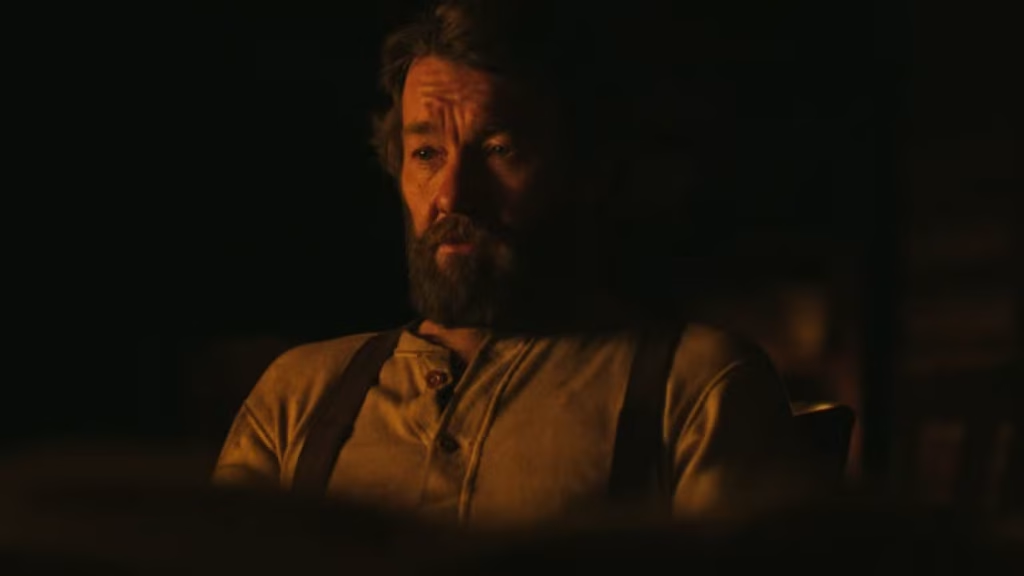
As compelling as the literal explanation is, the symbolic one feels closer to what the film is really doing.
The wolf girl arrives like a living expression of Robert’s unresolved grief over his daughter. She represents the life that kept going somewhere beyond his reach, the future he lost, and the hope he cannot fully kill off. She is wild, elusive, and impossible to hold onto, which makes her a perfect image for memory itself.
That is what makes the scene so moving. Robert is not only encountering a mysterious girl. He is confronting the possibility that love survives in distorted forms. Not tidy forms. Not reassuring forms. Distorted ones. Grief rarely gives people a polished, movie-friendly closure speech. Sometimes it gives them a glimpse, a feeling, a shape in the woods, and they build the rest from ache.
The wolf girl also fits the film’s larger obsession with disappearance. Train Dreams keeps returning to the idea that people, landscapes, and entire ways of life can slip away while the world keeps moving. The railroad expands. Forests fall. Time passes. Memory becomes its own unstable territory. In that context, the wolf girl feels less like a random mystery and more like the film putting a face on loss.
Why Robert Needs Her to Mean Something
Robert is not a man who processes pain through language. He processes it through endurance, through work, and through the stories he tells himself in order to continue living.
That is why the wolf girl scene cuts so deep. Whether she is literally his daughter or not is almost beside the point from Robert’s emotional perspective. What matters is that she opens a door inside him. She offers the possibility that what he lost was not fully erased. She lets him imagine that some part of his family remained in the world, changed but not annihilated.
And honestly, that is one of the most human things in the whole film.
People do this all the time, even if it is less cinematic and involves fewer wolves. They attach meaning to coincidences. They search for traces. They keep tiny beliefs alive because the alternative feels too brutal. Train Dreams understands that impulse without mocking it. The film treats Robert’s inner life with tenderness, even when it moves into territory that feels almost mythic.
The Wolf Girl Blurs the Line Between Frontier Reality and Folklore
One reason the scene lingers is that it taps into old American frontier mythology.
Train Dreams is not a conventional realist drama. It has the texture of a campfire story. A half-remembered family legend, or a tale passed from one generation to the next. The wolf girl belongs to that register. She feels like something you would hear about in a remote logging town and never fully verify.
That folkloric quality matters because it reflects Robert’s world. He lives at the edge of modernity. In a place where nature still feels spiritually overpowering and human lives can seem tiny by comparison. In a story like that, the wolf girl becomes more than a plot point. She becomes myth entering the life of an ordinary man.
And that is very much what Train Dreams loves to do. It takes a life that might look small from the outside and reveals how enormous it feels from within.
So Is She Real or Symbolic?
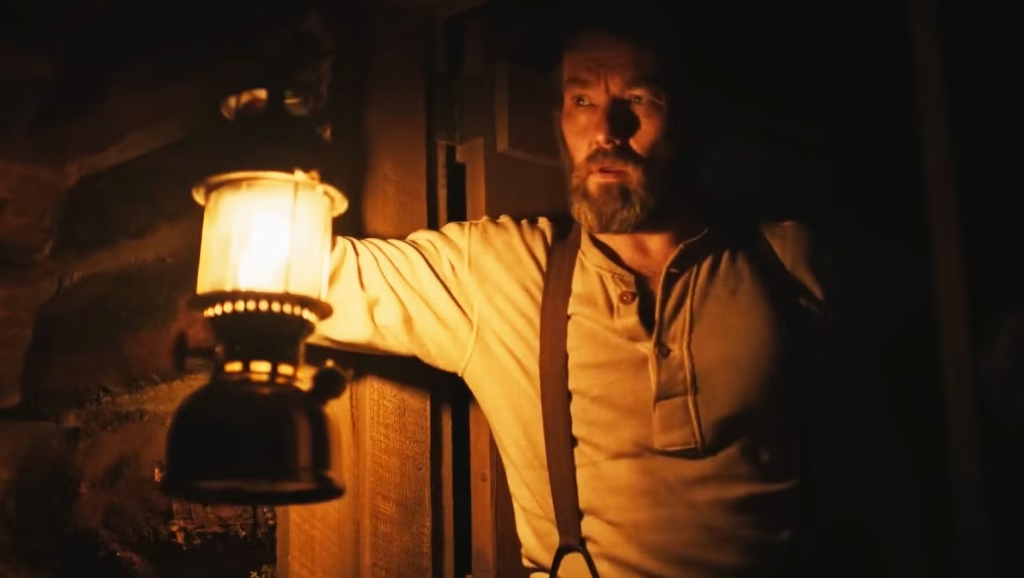
The best reading is that she is both.
Within the world of the film, the wolf girl may well be a real figure Robert encounters. Train Dreams leaves room for that. But the scene has been built so carefully around grief, longing, and the slipperiness of memory. She also clearly functions as a symbol. She embodies Robert’s refusal to believe that love can vanish without residue. She gives shape to his hope and need for some kind of emotional continuation.
That double meaning is why the scene works so well. If the film firmly told us she was real, it would lose some of its mystery. If it flatly announced she was symbolic, it would lose some of its ache. By holding both possibilities at once, Train Dreams creates something sadder and more beautiful.

Rachel Sikkema is a New Zealand-based writer and creative entrepreneur who explores the intersection of film, culture, and modern relationships. Through her articles, she examines how stories shape the way we connect, love and see ourselves – all for God’s glory. When she’s not writing about film and television, she’s watching Dexter and The White Lotus for the third time.