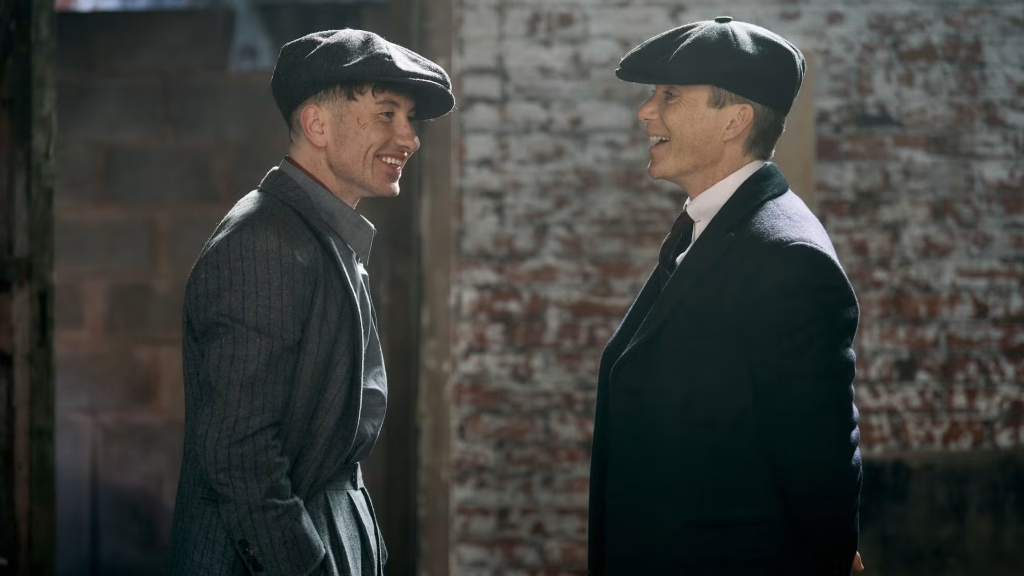
For years, Peaky Blinders sold itself with the swagger of a gangster story. There were guns, razors, races, political deals, smoky rooms, and Tommy Shelby. That surface has always been part of the appeal. But with The Immortal Man, the thing comes into focus in a sharper way. This story is not really interested in crime as the final point. It’s interested in what survives a man once the power, money, and mythology start slipping out of his hands.
That’s why the film lands differently from a standard crime saga. It brings Tommy Shelby, played again by Cillian Murphy, back into a world shaped by war, memory, family fractures. One question has haunted the series from the start. What exactly is he leaving behind? Official plot material frames the film around Tommy confronting his past and deciding whether to face or destroy his legacy. This is about as clear a statement of purpose as you can get.
Crime Was Always the Vehicle
The biggest trick Peaky Blinders ever pulled was making viewers think the rise was the story.
Of course the criminal empire mattered. It gave the show momentum. It created enemies, fed Tommy’s ambition, and gave every season a fresh set of stakes. But even in the original run, crime usually worked as the engine, not the destination. The real story sat underneath it, in Tommy’s obsession with control, in the family’s constant reshuffling of loyalty, and in the way success kept failing to make any of them feel safe.
That matters even more in The Immortal Man. By the time you reach this point in the Shelby saga, there is nothing glamorous left in the machinery. The empire is less exciting than the damage it leaves behind. Every choice now feels like it belongs to a reckoning. You are not watching a man build something. You are watching him discover what that “something” has cost.
Tommy Shelby Wants to Outlive Himself
The title The Immortal Man sounds, at first, like classic Tommy Shelby mythmaking. It suggests a man too cunning, too feared, too central to history to ever really disappear. But the film’s central tension makes that idea feel almost ironic.
Immortality here is not about staying alive. It is about remaining present after death in memory, in reputation, in trauma, in the habits your children inherit, and in the stories people tell when you are no longer in the room. Tommy has always acted like someone trying to master history through force of will. He makes plans within plans, predicts betrayals, and keeps moving as if stopping would mean being swallowed by grief. The film turns that instinct back on him.
That is where the legacy reading becomes hard to ignore. Tommy is not simply asking whether he can win one more fight. He is asking what version of himself he has created for the next generation to live with.
The Family Is the Real Battlefield

A true crime story usually builds toward territory, wealth, or survival. Peaky Blinders has always used those things, but its real battlefield has been the Shelby family itself.
That remains true here. Sophie Rundle returns as Ada, and Barry Keoghan’s Duke becomes especially important because he represents the uncomfortable future of the Shelby name. The film is not content to treat family as sentimental motivation in the background. Family is the inheritance system. It is where power gets passed down, distorted, weaponized, or rejected.
That’s also why the story hits harder when it leans into betrayal and guilt rather than business strategy. Recent coverage around the film’s major reveal about Arthur makes it plain that Steven Knight wanted Tommy to carry an act he could not forgive himself for. That choice pushes the movie away from conventional gangster cool and into something darker and more intimate. The point is no longer who runs Birmingham best. The point is what kind of poison gets sealed into the family line when love, violence, resentment, and leadership all become impossible to separate.
Tommy’s Myth Is Finally Being Judged
One reason this franchise has lasted is that Tommy Shelby works on two levels at once. He is a man and a legend. He is painfully human, yet constantly framed like folklore.
The film seems fully aware of that split. Some of the strongest responses to it have focused on Tommy as both hero and monster, someone who inspires loyalty and awe while also damaging the very people he claims to protect. That tension is crucial. Legacy is not a nice word in Peaky Blinders. It is not about noble remembrance. It is about who gets to control the story after the blood has dried.
And honestly, that has been Tommy’s real addiction for years. Not money. Not even violence. Narrative. He wants to be the author of events. He wants to decide what things mean. The tragedy is that legacy never works that way. Once you create fear, loyalty, dependency, and damage in other people, your story no longer belongs entirely to you.
The Wartime Setting Changes the Meaning
Setting the film against World War II-era chaos matters for more than atmosphere. The original series often linked Tommy’s interior war to national instability, but here the historical backdrop sharpens the theme.
A wartime story naturally asks what is worth preserving and what deserves to burn. Nations ask that question. Families ask it too. So does Tommy. The official synopsis leans on exactly that conflict, with the future of both the family and the country hanging in the balance. That framing gives the movie a broader moral scale than a simple gangland feud. It places the Shelby name inside a moment when Britain itself is wrestling with survival, reinvention, and memory.
When that happens, crime starts to look smaller. Still important, yes, but smaller. It becomes one strand in a much bigger argument about inheritance. What lasts after violence? What gets rebuilt? Who pays for the myths powerful men create?
Why That Idea Suits Peaky Blinders So Well
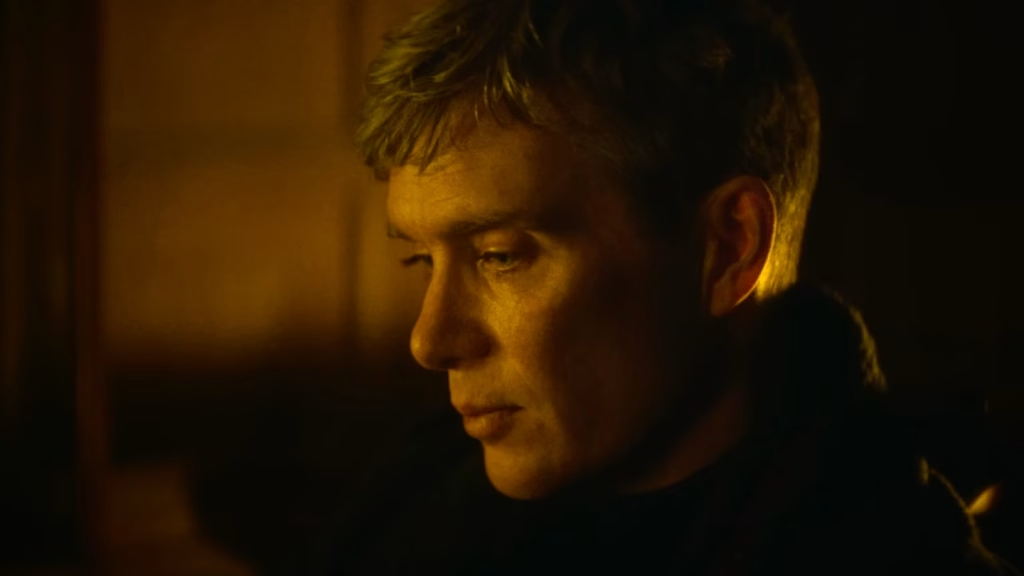
There is a reason fans keep coming back to this story even after the business plots blur together in memory. Most people do not remember every scheme in clean detail. They remember Tommy at a table making a terrible bargain. They remember Polly’s absence like a wound in the fabric. They remember Ada seeing through him. They remember Arthur unraveling. They remember the sense that every Shelby victory carried a curse inside it.
That is legacy storytelling. It sticks because it is emotional before it is procedural.
So when The Immortal Man pushes Tommy toward a final reckoning, it is not betraying the series by moving beyond crime. It is revealing what the series was circling all along. Crime built the throne, but legacy decides whether the throne means anything.
That is what makes the film feel like a proper ending to this chapter of Peaky Blinders. Beneath everything, it understands that the real question was never how Tommy Shelby made his empire. The real question was what would still be standing after him, and whether any of it was worth the price.

Rachel Sikkema is a New Zealand-based writer and creative entrepreneur who explores the intersection of film, culture, and modern relationships. Through her articles, she examines how stories shape the way we connect, love and see ourselves – all for God’s glory. When she’s not writing about film and television, she’s watching Dexter and The White Lotus for the third time.