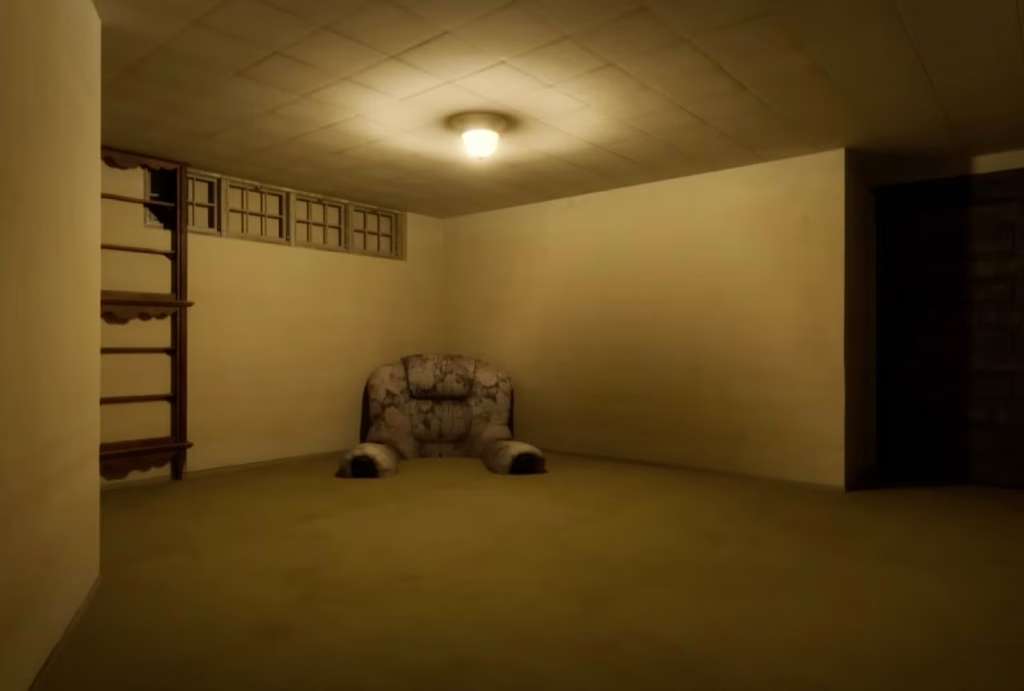
The first shock of The Backrooms is recognition.
You see the yellow walls, the dead carpet, the fluorescent panels, the empty corners, and your brain does something annoying. It starts searching. Maybe you have never been in that exact room, but you know its cousins. A school hallway after pickup. A hotel corridor near the ice machine. The back half of a furniture store. A church basement with folding chairs stacked against the wall. Some office building where the air smelled like dust and old coffee.
That is why Kane Parsons’ nightmare spread so easily online before A24 turned it into a movie. The Backrooms never needed to introduce itself like a new monster. It arrived looking like a place everyone had already visited by mistake.
In the film, Chiwetel Ejiofor’s Clark walks through those rooms with a face full of wary recognition. He looks scared, yes, but also bothered by how ordinary the space feels. That is the sick little magic trick. The Backrooms feels impossible and familiar at the same time.
The internet loves a mystery, but it loves a shared feeling even more. The Backrooms became huge because people looked at one ugly yellow room and thought, somehow, I know that place.
The Room Looks Too Ordinary to Trust
Horror usually asks us to enter places with obvious danger. The old house on the hill. The woods at night. The basement with the bad smell. The abandoned hospital where every wall seems to be whispering, please make one sensible choice.
The Backrooms has a different flavor. It looks like a place where a workplace safety video might be filmed.
That blandness is the point. The yellow wallpaper has the warmth of something left under cheap lighting too long. The carpet looks flattened by thousands of forgotten footsteps. The ceiling tiles form a grid that should feel orderly, but the order starts to feel hostile after a while.
Parsons understands that ugly functional spaces can carry their own kind of dread. These rooms were made for passing through, waiting, stocking, filing, cleaning, or ignoring. They have no romance. No personality. No dramatic rot. They feel designed by people who had a budget meeting and lost the will to live somewhere between paint samples.
That makes them scarier.
The Backrooms turns the background of modern life into the main event. It takes places people barely notice and asks what happens when those places continue forever.
Chiwetel Ejiofor Gives the Space a Human Pulse
A yellow room by itself can be eerie. Chiwetel Ejiofor inside that room makes it hurt.
As Clark, Ejiofor gives the film a steady, grounded fear. He has the look of a man trying to think his way out of a problem that keeps refusing to become a problem. Clark checks corners and listens. He looks for pattern. He tries to make the space behave like a building.
That performance is crucial because the Backrooms could easily become pure aesthetic. Wallpaper, carpet, hum, repeat. Creepy, sure. But Ejiofor gives every empty hallway a human cost.
Clark moves through the maze like someone who understands ordinary rooms. He knows how doors should work and how distance should feel. He knows a hallway should have a purpose beyond making your stomach drop. The Backrooms gives him enough recognizable pieces to keep him trying.
That is where the fear lives. Recognition creates hope, and the place keeps punishing him for it.
Ejiofor makes that gradual erosion feel physical. His face keeps tightening in tiny increments, as if each new room takes one more useful piece of the world away from him.
Everyone Has Their Own Version of That Room
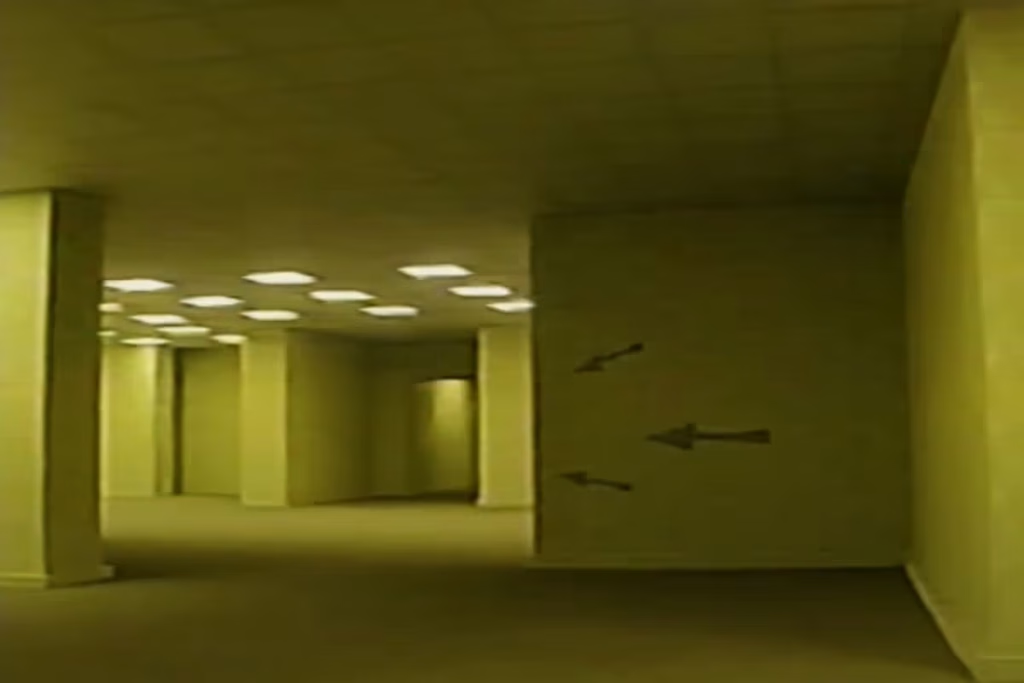
Part of the Backrooms’ power comes from how unspecific it is.
If it looked like one famous building, the mystery would shrink. If the walls had a clear era, class, country, or decorative style, viewers could place it at a distance. Instead, the Backrooms looks generic enough to be personal.
People bring their own memories to it. Someone sees a dead mall. Someone else sees a medical office. Somebody sees a school corridor. Someone sees the beige hallway outside a childhood dentist. The space works like a blank template for unease.
That is rare in horror. Most scary places have a strong identity. The Overlook Hotel has its grand haunted personality. The house in Hereditary feels like a family wound with furniture. The Backrooms feels like the room behind the room. The place you accidentally saw when someone left a service door open.
The fact that it feels half remembered makes it stronger. It has the texture of a memory with no story attached. You recall the walls, maybe the light, maybe the smell of carpet, but you cannot explain why the place stayed in your head.
The Backrooms gives that useless memory teeth.
Renate Reinsve Makes the Familiarity Feel Emotional
Renate Reinsve’s Mary brings a different pressure to the film. Clark’s fear is spatial. Mary’s fear is personal, focused, and painfully alert.
Reinsve has a gift for playing people who seem to be holding ten thoughts behind one careful expression. In The Backrooms, that quality matters. Mary looks at the impossible with the strain of someone trying to keep it attached to human feeling. She wants answers, but she also wants Clark. That makes the maze more than a strange place.
It becomes something that can take a person and leave everyone else standing in the aftermath.
Her presence helps the movie avoid turning the Backrooms into a simple internet cool thing. The yellow rooms are weird, yes, and the lore is fun to pick apart. But Reinsve makes the wrongness feel intimate. If the Backrooms can swallow someone, then every familiar hallway begins to look a little guilty.
That is the real contamination. The movie teaches you to distrust ordinary space.
Mary also sharpens the film’s connection to memory. The Backrooms feels like it borrows from people. Rooms, fears, habits, details. It takes fragments of recognizable life and arranges them into something that feels almost correct.
Almost is where the dread starts chewing.
The Internet Was Built for This Kind of Fear
The Backrooms spread online because it matched the way internet horror works.
A single image can become a dare. A short video can feel like recovered evidence. A forum post can turn a weird room into folklore because thousands of people start adding their own fear to it. That collaborative quality suits the Backrooms perfectly. The concept feels unfinished in a productive way.
There is always another hallway. Another level, another blurry screenshot. Another person claiming they have seen a place like it.
Parsons came from that world, and the movie keeps the original digital unease. Even with actors, production design, and a full feature structure, The Backrooms still feels like something found rather than invented. The rooms have the eerie flatness of an image passed around too many times. The silence feels uploaded.
That is why the concept hit so hard. The internet thrives on shared recognition with no clear source. A meme works because people understand it before they explain it. The Backrooms works the same way, only the punchline is dread.
You see and know the room. You wish you did not.
Mark Duplass Adds the Discomfort of Normal People Near Weird Things
Mark Duplass fits this world because he brings a very human kind of awkwardness. His screen presence often has that slight social wobble, friendly one second and uneasy the next. In The Backrooms, that quality works beautifully around a concept that keeps turning normality into a trap.
The movie needs people who can make the impossible feel adjacent to daily life. Duplass helps with that. He carries the energy of adult conversations happening too close to something nobody understands. Plans, questions, nervous reasoning, the little verbal habits people use when fear has entered the room and everyone would like to pretend it can be managed.
That is part of why the Backrooms feels so modern. It does not belong to ancient curses or gothic bloodlines. It’s connected to workplaces, furniture stores, offices, corridors, and rooms with no windows. It feels like cosmic horror discovered behind a maintenance door.
Finn Bennett and Lukita Maxwell also widen the sense that this is a shared nightmare rather than one man’s private breakdown. The Backrooms gains power when different people enter its orbit because each person seems to recognize a slightly different version of the same wrong space.
The room belongs to everyone. Horrible news, really.
The Ugliness Is Doing Serious Work
The Backrooms’ look has become so iconic that it is easy to forget how strange the choice is. Yellow walls. Dingy carpet. Fluorescent lighting. Empty commercial space. This is deeply unglamorous horror.
That lack of glamour is a gift.
Pretty horror can create distance. The Backrooms gives you no such pleasure. It looks cheap in a way that feels bodily. You can almost smell the room. Old carpet, stale air, cleaning product, warm dust on light fixtures. The kind of atmosphere that makes you want to wash your hands for reasons you cannot defend.
The production design understands that sensory disgust can be quiet. The walls do not ooze. The carpet does not need to move. The lights do not need to flicker every five seconds. The room just has to sit there, ugly and patient, until your brain starts supplying the rest.
That is why the original idea survived so much expansion. The central image remains strong. A room that looks harmless until it feels infinite.
The Backrooms Makes Recognition Feel Like a Trap
The genius of The Backrooms is that it turns familiarity against the viewer.
Most horror makes us afraid of the unknown. This one makes us afraid of knowing too much. The more familiar the rooms feel, the worse the effect becomes. A strange alien temple might scare you, but at least it belongs elsewhere. The Backrooms looks like it belongs in the same world as your errands, appointments, school memories, and bad jobs.
That closeness is the whole thing.
Kane Parsons built a horror concept out of spaces people already carry around in their heads. Chiwetel Ejiofor gives that concept a frightened human center as Clark. Renate Reinsve’s Mary gives it emotional ache. Mark Duplass, Finn Bennett, and Lukita Maxwell help make the nightmare feel populated by real people rather than just internet lore.
The Backrooms became huge because everyone recognizes that room, even if they cannot name it.
It is the room behind the door nobody meant to open. The hallway you passed once and forgot. The office space after the workers have gone home. The place that should have stayed in the background.
Now it has the lights on, and it remembers you back.

Rachel Sikkema is a New Zealand-based writer and creative entrepreneur who explores the intersection of film, culture, and modern relationships. Through her articles, she examines how stories shape the way we connect, love and see ourselves – all for God’s glory. When she’s not writing about film and television, she’s watching Dexter and The White Lotus for the third time.