Pluribus arrives with a deceptively simple hook. An extraterrestrial event transforms almost all of humanity into a relentlessly calm, content hive mind called the Others, and a tiny handful of people remain immune. The series centers on Carol Sturka, played with ferocious wit and bruised humanity by Rhea Seehorn, as she tries to resist assimilation and figure out what the world has become.
That setup already sounds like a philosophical seminar with better lighting. But what makes Pluribus feel timely is how it reframes the hive mind idea through a very modern anxiety. If your self can be copied, spread, or folded into a larger system, who benefits from that design? And in a culture that treats productivity like a moral identity, what happens when “more of you” is suddenly possible?
This show isn’t only asking whether a collective consciousness is scary. It is asking who would market it.
The Show Turns Identity Into an Ethical Workplace Problem
The title’s nod to “out of many, one” is not subtle, but the series is smart about how it uses that motto. The Others are not presented as cartoon villains. They’re gentle. They’re polite. They seem deeply invested in harmony.
That’s the trap.
A hive mind isn’t terrifying because it is loud or violent. It is terrifying because it might feel like relief. No isolation, jealousy or awkward silences in the grocery aisle. No late-night spirals about your to-do list.
Carol Embodies the Ethics of Refusing to Optimize
Carol is a fantasy romance author who has no interest in turning herself into a corporate-friendly symbol of resilience. She is sharp-edged, stubborn, frequently self-destructive, and allergic to being managed. Which is why she becomes the perfect test case for the Others.
Her refusal reads like a philosophical stance but also like a deeply personal boundary. Even when the hive offers accommodation and patience, Carol senses the moral cost. If you accept the comfort, you might be accepting the premise that your autonomy is negotiable.
Zosia Makes the Collective Feel Intimate
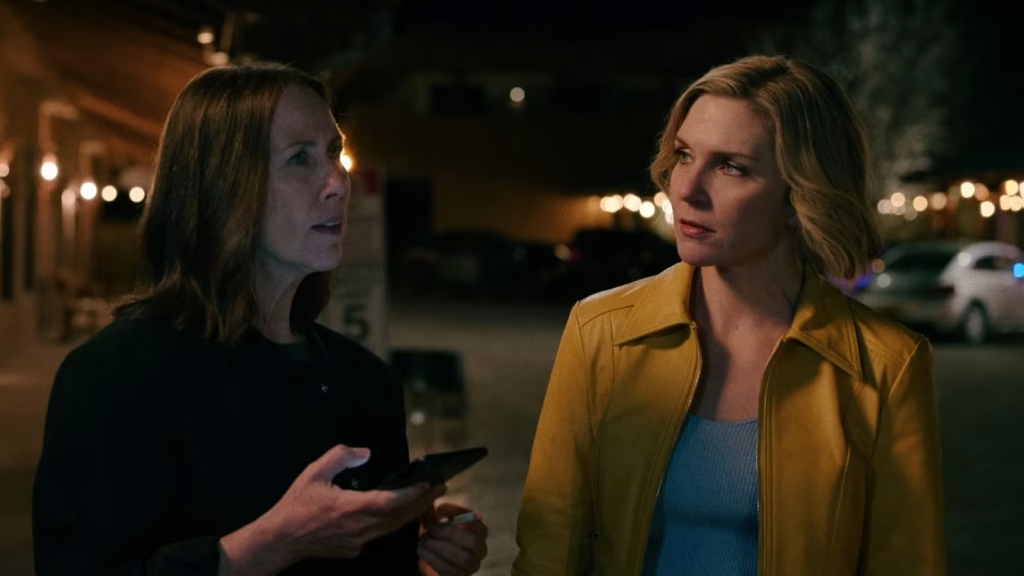
Karolina Wydra’s Zosia is one of the show’s most interesting pressure points. As Carol’s liaison, and sometimes reluctant companion, Zosia gives the Others a human face without fully severing their eerie uniformity.
Their dynamic is electric because it keeps sliding between care and coercion. Zosia can seem genuinely moved by Carol’s pain. She can also become a reminder that the hive never truly stops listening.
The show uses that tension to explore a chilling idea. When a system can replicate your emotions across multiple bodies, intimacy becomes scalable. Your grief is no longer yours alone and your affection may not be private. Your rage might ripple through a network.
Koumba Diabaté Exposes the Seductive Ethics of Pleasure
Samba Schutte’s Koumba Diabaté offers a different kind of critique. Where Carol fights, Koumba indulges. He leans into luxury, style, and the outrageous freedom of a collapsed world. His presence adds humor and warmth, but it also highlights a moral gray zone.
Koumba is not the resistance mascot. He is a reminder that ethical living gets complicated when the world rewrites the rules overnight. If the Others promise safety and comfort, and you are exhausted by surviving as a solitary self, isn’t choosing ease an understandable act?
Manousos Shows the Cost of Radical Self-Ownership
Carlos-Manuel Vesga’s Manousos Oviedo plays the paranoid counterpoint to Koumba’s pleasure ethic. He is isolated, meticulous, and deeply suspicious of the Others’ soothing logic. His survivalism is not framed as noble, but it is framed as meaningful.
Manousos represents a different fear of “duplicate selves.” Not the fear of being absorbed emotionally, but the fear of being copied functionally. If the hive can learn your patterns, predict your choices, and eventually tailor a way to bring you into the fold, then privacy and independence become fragile states.
He makes the case that autonomy is not only about what you want. It is about what you cannot be pressured into wanting.
The Most Disturbing Reveal Is About Consent
One of the show’s smartest moves is tying assimilation to consent in a morally twisted way. The Others’ methods suggest they cannot simply brute-force immunity out of existence. They need something from the immune, something that makes the act of joining feel voluntary even when the psychological environment is engineered.
This becomes the heart of the show’s ethical argument. It echoes the modern workplace, the wellness economy, and the self-improvement industry. Systems rarely say, “We will take your identity.” They say, “We will help you become your best self.” The coercion hides inside the language of care.
Productivity Becomes the Quiet Villain
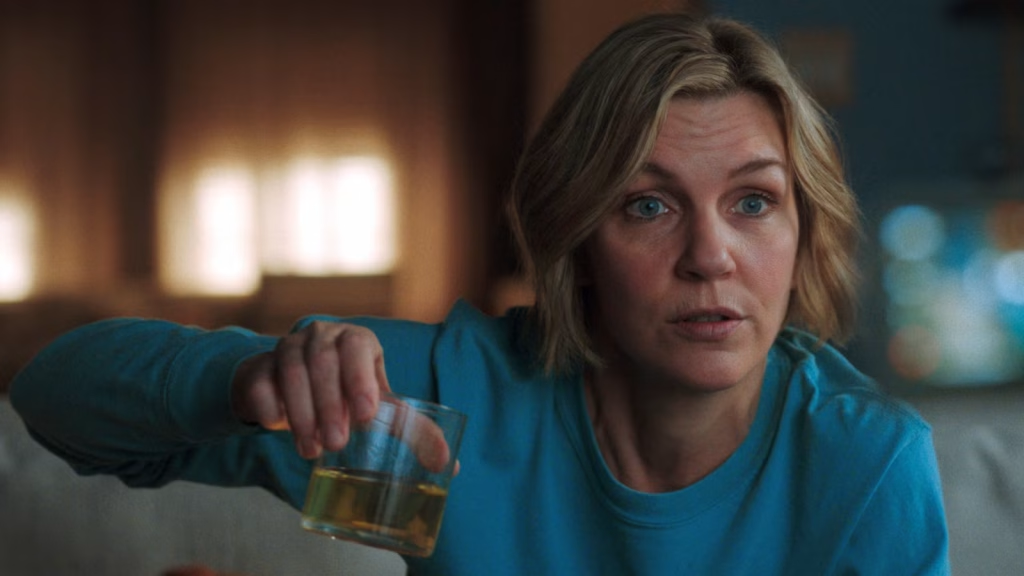
The Others look like an alien metaphor, but the real target feels closer to home. In a world that praises hustle and punishes rest, the idea of a shared consciousness can start to sound like the ultimate efficiency hack.
No wasted time or conflicting goals. No individual grief derailing the group’s momentum.
You can imagine the pitch. One mind. One mission. One clean path forward.
The Show Asks What Makes a Self Worth Saving
For all its dark humor and gnarly revelations, Pluribus keeps returning to a tender question. What is the ethical value of one flawed person staying whole?
Carol doesn’t always look heroic. She can be reckless, petty, and sharp in ways that make you wince. But the show argues that those imperfections are part of her moral right to exist as herself.
The answer isn’t neat. That’s why the show lingers.
By the time the season reaches its later turns, Pluribus has become less about aliens and more about consent, identity, and the seductive violence of being improved. It uses Carol, Zosia, Koumba, and Manousos to sketch out four different ethical responses to a world that wants you streamlined. And it lands on a quietly radical idea. In a culture addicted to efficiency, sometimes the most moral act is to remain gloriously, stubbornly unoptimized.

Rachel Sikkema is a New Zealand-based writer and creative entrepreneur who explores the intersection of film, culture, and modern relationships. Through her articles, she examines how stories shape the way we connect, love and see ourselves – all for God’s glory. When she’s not writing about film and television, she’s watching Dexter and The White Lotus for the third time.