
Pluribus opens with a simple nightmare: you wake up one day and everyone around you is happy, peaceful, in sync, and absolutely convinced that you should join them. The Joining has folded almost all of humanity into a serene hive mind, leaving only a scattered handful of holdouts who still think of themselves as separate people. The show frames that sci fi hook around one very human lens, romance author Carol Sturka, played by Rhea Seehorn, who starts to realise that staying “herself” might cost more than she thought.
Wikipedia
Because this is a Vince Gilligan series, the characters are doing double duty. They are people with habits and hangups, but they are also moving parts in a big symbolic machine about individuality, connection, and the pressure to merge into something larger than yourself. Pluribus is named after “e pluribus unum” for a reason, and most of the symbolism flows from that tension between the one and the many.
Carol Sturka and the Problem of Staying “You”
Carol Sturka (Rhea Seehorn) is one of only thirteen people on Earth who are immune to the Joining, which instantly makes her a symbol as much as a protagonist. She represents the fear that individuality is both precious and petty.
Viewed symbolically, Carol is the artist who is terrified that her voice only matters if it stays separate. The Joining tempts her with the promise that she could let go of anxiety, grief, and responsibility. Remaining Carol means holding on to pain and doubt, and the show keeps asking whether that is integrity or ego in disguise.
Zosia as the Gentle Face of Surrender
If Carol is the jagged outline of individuality, Zosia (Karolina Wydra) is the soft, polished edge of the hive mind. She is one of the Others assigned as Carol’s liaison, a polite, smiling embodiment of the Joining’s sales pitch. Zosia never rants or threatens. She radiates competence and compassion, and she almost always sounds reasonable.
In that sense, Zosia feels like the symbol of a system that persuades rather than coerces. She walks Carol through the hospital, offers comfort, and frames assimilation as a cure for loneliness instead of a loss. When Carol’s attraction to her surfaces, it deepens the metaphor. Zosia holds the allure of finally relaxing into something bigger, of being seen and loved by a consciousness that knows everything about you.
Helen as the Ghost of Carol’s Old Life
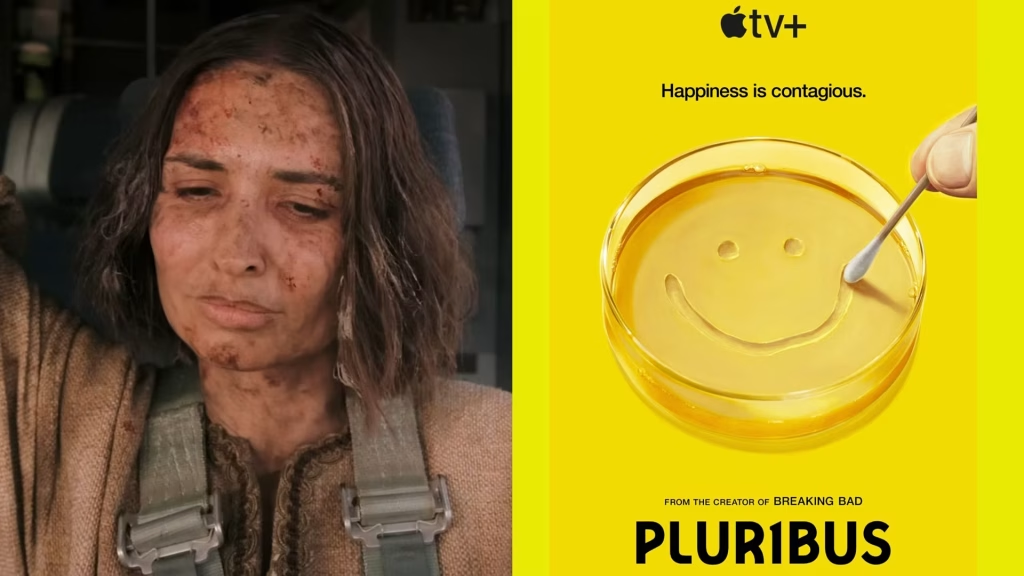
Before the world changed, Carol’s life orbited around Helen L. Umstead (Miriam Shor), her agent in public and her partner in private. Helen is the one who turned Carol’s talent into a business, negotiated deals, and helped build the brand that the Others later obsess over. She is also the person Carol never fully claimed, their relationship tucked away in quiet corners rather than openly embraced.
Symbolically, Helen represents the version of Carol that was already compromised before aliens ever got involved. She stands for the way capitalism, image management, and self protection can flatten a person long before a hive mind arrives. When Helen is taken by the Joining and later dies, it hurts not only because Carol loses someone she loves, but because she loses the life where she could pretend that small compromises were harmless.
Manousos and Koumba as Rival Myths of Survival
Manousos represents the fantasy of total self reliance. He hoards supplies, refuses any contact, and treats the hive mind as an invading force that must be kept out at all costs. In him, you can see the bunker mentality of people who think safety comes from walls, locks, and a vicious kind of purity. Surviving becomes its own identity, even if that means living inside a cage you built yourself.
Koumba moves in the opposite direction. After the Joining, he leans into pleasure, attention, and spectacle, surrounding himself with an entourage and treating the apocalypse like a party where the bill will never come due. He is the symbol of coping through excess, of trying to drown out existential dread with sex, alcohol, and status. Both men are fun to watch. Both feel uncomfortably familiar.
Together, Manousos and Koumba are possible futures for Carol that the show gently rejects. One is too closed, the other too shallow. Carol’s messy path, full of guilt and bad decisions, sits somewhere in between those extremes.
The Others as a Single Unnerving Character
The hive mind itself, “the Others”, works as a kind of collective character. Individually, they are nurses, neighbours, baristas, and government officials. As a group, they speak with one voice that insists everyone is content, safe, and grateful. They cannot lie, which makes their reassurance even stranger.
In a more literal reading, the Others can feel like a metaphor for algorithmic culture, where recommendations, feeds, and trending opinions blend into a single soft pressure to think and feel in sync with everyone else. Critics have also noted that the show keeps brushing against our current arguments about artificial intelligence and the idea of “smooshing” all human minds into one super system.
Why the Symbolism Stays Slippery

We are only partway through Pluribus season 1, so any symbolic reading is a moving target. New episodes keep reframing characters we thought we understood. The show’s creator has openly said that spelling out the metaphor would drain it of power.
Carol is the stubborn self who would rather ache than merge. Zosia is the soothing, persuasive voice of surrender. Helen is the compromise that already hollowed you out. Manousos and Koumba are extreme survival fantasies that collapse under their own weight. The Others are the chorus of consensus that says you will feel better once you stop asking questions.

Rachel Sikkema is a New Zealand-based writer and creative entrepreneur who explores the intersection of film, culture, and modern relationships. Through her articles, she examines how stories shape the way we connect, love and see ourselves – all for God’s glory. When she’s not writing about film and television, she’s watching Dexter and The White Lotus for the third time.