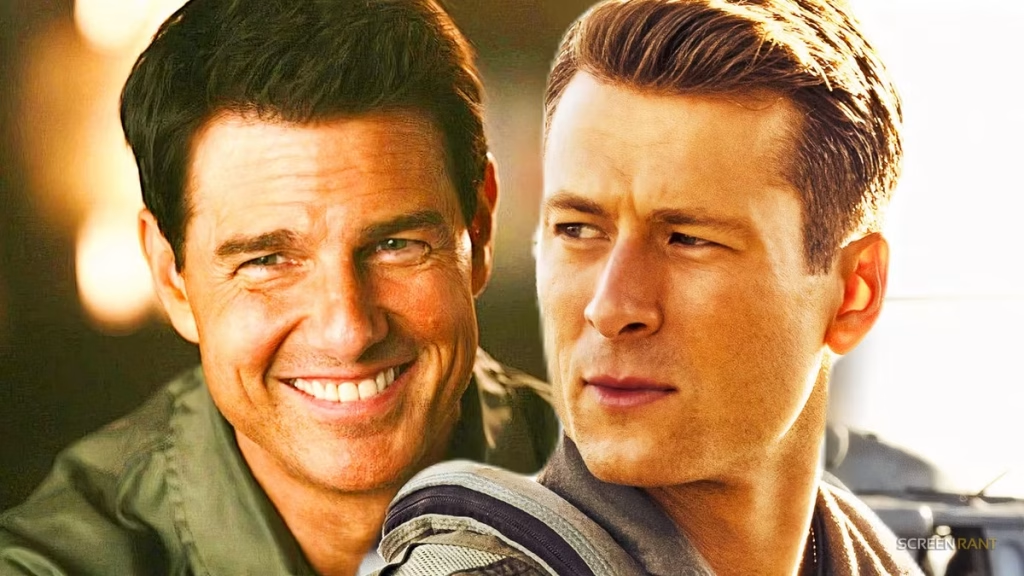
The first thing Top Gun: Maverick gets right is the simplest thing in the world.
It knows where the camera should go.
That sounds almost insultingly basic until you sit through enough modern blockbusters that treat action like a bag of dropped silverware. Something explodes. Somebody yells into a headset. The sky fills with digital clutter. A city gets chewed up. A blue beam appears for legal reasons. Then the credits roll and your brain remembers almost none of it.
Top Gun: Maverick goes the other way.
It gives you faces, bodies, machines, sunlight, sweat, and clean geography. It gives you a star who still understands how to carry a movie without pretending irony is a personality. It gives you emotional stakes that fit inside the story instead of being stapled on top. And maybe most important, it gives you an old-school blockbuster rhythm without making the whole thing feel embalmed.
That is why the movie landed the way it did. It did not just remind people of older studio filmmaking. It reminded them how satisfying a blockbuster can feel when someone actually wants each scene to register.
Quick Answer: Top Gun: Maverick feels built instead of assembled because every part of the film works toward the same goal. The action is clear, the emotional stakes stay grounded, and the practical filmmaking gives the movie real weight from scene to scene. Instead of feeling patched together from franchise obligations, nostalgia, and noisy spectacle, Top Gun: Maverick moves with purpose, which is why it feels sharper and more satisfying than most modern blockbusters.
The Action Makes Physical Sense
A lot of current tentpole movies seem to confuse scale with impact.
They get bigger and louder, but the scenes start to feel less real as they go. Everything moves fast. Nothing feels heavy. Buildings collapse with all the emotional weight of a desktop screensaver. You watch characters survive things that should turn them into soup and somehow the movie wants you to feel tension.
Maverick fixes that by making the action physical from the first frame.
The Darkstar sequence has real bite because the plane feels like a machine with mass. When Maverick pushes it too far, the moment does not play like a cartoon. It feels dangerous and expensive and slightly deranged in exactly the right proportion. Then the movie keeps building on that logic. Jets bank, strain, drop, rise, and fight against the air itself. The actors look uncomfortable. Good. Being shot through the sky at ridiculous speed should ruin your day a little.
By the time the final mission arrives, the audience has learned how this world works. Low altitude matters. Timing matters. A delay matters. The climb matters. Missiles matter. The movie has taught us the shape of the danger, so every movement has meaning.
That alone separates it from a lot of modern action filmmaking. Maverick trusts clarity.
It Has a Real Movie Star at the Center
Tom Cruise still behaves like someone who thinks the audience deserves a show.
That sounds obvious. It is rare.
A lot of modern blockbusters are built to make the brand feel bigger than the person inside it. Stars become replaceable. Charisma gets flattened into quips, exposition, and franchise maintenance. Even talented actors can end up looking trapped inside the machinery.
Cruise is the machinery.
In Top Gun: Maverick, he brings that strange old-fashioned quality where a scene sharpens the second he enters it. He knows how to stand next to a plane. He knows how to run in a way that feels faintly insane and deeply cinematic. He knows how to grin, pause, deflect, and sell a ridiculous piece of blockbuster business through pure conviction.
More than that, he knows how to let the coolness crack.
Maverick is still a legend, but the movie lets him feel aged by guilt. Goose is still in the room. Iceman is fading. Rooster carries all the old pain back into his life. Cruise does not play Maverick as a man gliding untouched through nostalgia. He plays him like someone who built his whole adulthood around outrunning grief and suddenly ran out of runway.
That is star power with texture. A lot of blockbusters settle for the pose and skip the bruise.
The Movie Respects the Audience’s Attention Span

One of the sneakiest things Maverick does better than most modern blockbusters is pacing.
It moves with confidence. Not panic. Confidence.
The film does not act like every quiet moment needs to be apologized for with a joke. It does not cut away from emotion because it is scared sincerity will make the room uncomfortable. It does not explain every beat until the viewer feels trapped in a very expensive group project.
Scenes get in, do their job, and get out.
The Hard Deck scenes establish character and chemistry fast. The training runs build tension while also teaching the audience the mission rules. The Iceman scene slows the whole movie down because it knows the silence will land harder than more noise. The beach football scene is absurd, yes, but it is also functional. The squad becomes a group instead of a collection of call signs with biceps.
Modern blockbuster pacing often feels anxious. Maverick feels composed.
That is a huge difference. The movie trusts its beats enough to let them land before rushing to the next one. That makes the whole thing more rewatchable too, because individual scenes have shape rather than blur.
It Knows Nostalgia Needs Consequences
Legacy sequels usually make one of two mistakes.
They either worship the original until the new movie feels trapped inside a museum gift shop, or they drag the old material back in name only and hope the audience will do the emotional work for them. Top Gun: Maverick does something smarter. It makes the past hurt.
Goose is the obvious example. The sequel does not just mention him because he is important to the brand. Goose matters because his death still warps Maverick’s decisions in the present. Rooster walks into the movie carrying that old wound in human form. Every scene between him and Maverick has the first film humming underneath it.
That is why the piano scene works. That is why the beach scenes have melancholy under the sunlight. That is why Maverick taking the hit for Rooster feels like more than heroics. The nostalgia has emotional teeth.
Iceman gets the same treatment. Val Kilmer’s scene works because it does not treat his return like a checklist item. The film lets time be visible. It lets change be painful. It lets old rivalry age into friendship and protection. That gives the sequel gravity.
The past is not decoration here. It has consequences. That is a huge part of why the movie feels fuller than the average blockbuster sequel built around recognition applause.
The Supporting Cast Actually Matters
This is another area where big franchise movies often get lazy.
A new group of characters arrives, each one assigned a trait and a haircut, and the movie expects the audience to remember them through sheer optimism. Maverick sketches its supporting cast quickly, but it sketches them well.
Rooster feels closed-off and heavy before he says much. Hangman struts into the frame like he already knows he will steal a few scenes. Phoenix has a steady competence that immediately cuts through the room. Bob looks like the kind of guy who brought spare batteries and emotional regulation.
That is enough.
The movie does not need twenty flashbacks or neat little trauma dossiers for each pilot. It uses presence, rivalry, line delivery, and group rhythm. By the time the final mission begins, you know who these people are in the ways that matter. You know who hesitates. You know who peacocks. You know who quietly holds things together.
That gives the ensemble real value. They are not there to pad the franchise. They make the tension work.
A lot of modern blockbusters overload the cast and underfeed the characters. Maverick keeps the circle manageable and lets chemistry do the heavy lifting.
It Believes in Sincerity Without Flinching

This may be the biggest difference of all.
Top Gun: Maverick believes in earnestness.
It believes a film can be corny and moving at the same time. It believes a last-second save can still thrill. It believes a hug on a carrier deck can feel earned. It believes audiences will accept a giant emotional payoff if the movie has done the groundwork instead of hiding behind jokes.
That confidence feels almost rebellious now.
So many blockbusters act embarrassed by their own feelings. They undercut dramatic moments with a gag, or they keep everything pitched at the same ironic smirk because they are scared of looking uncool. Maverick does not care about that. It wants the emotional lines to play clean. Maverick loves Goose. Rooster feels betrayed. Penny wants Maverick to stop drifting. Iceman matters. Hangman needs to show up. The mission needs to work.
Simple does not mean thin. Here, simple means precise.
When the movie leans into the full force of its own sincerity, it wins. The audience feels it because the film itself feels unembarrassed. That quality is harder to fake than people think.
It Was Built, Not Assembled
The best way to describe what makes Top Gun: Maverick feel different is that it feels built.
A lot of modern blockbusters feel assembled from approved parts. Franchise obligations here. Second-unit noise there. A joke every few pages. A teaser for the next thing. A climax inflated beyond usefulness. You can almost hear the meetings in the finished product.
Maverick feels like people made specific choices.
The scenes have direction. The action has logic. The emotional arcs point somewhere. The star at the center remains central. The nostalgia serves the story instead of sitting on it. The supporting cast has edges. The final mission has geography. Even the ridiculous parts are ridiculous with discipline.
That is why it hit so hard.
It gave audiences something many blockbusters have quietly stopped offering, which is the feeling that the filmmakers wanted the movie itself to work more than the broader machine around it. No homework. No clutter. No apology for being a blockbuster. Just a clean, forceful, deeply satisfying piece of popular entertainment built by people who know exactly how to make one.
That is rarer than it should be.
And once people got a taste of it, no wonder they kept coming back.

Rachel Sikkema is a New Zealand-based writer and creative entrepreneur who explores the intersection of film, culture, and modern relationships. Through her articles, she examines how stories shape the way we connect, love and see ourselves – all for God’s glory. When she’s not writing about film and television, she’s watching Dexter and The White Lotus for the third time.