The older I get, the more I notice how stories about “saving the world” quietly turn into stories about cleaning up someone else’s mess. Avatar: Fire and Ash leans into that idea with both hands. It’s not mainly asking whether Pandora can survive human greed, even though that threat is still there. It’s asking what happens to the kids who grow up after the first catastrophe, when the adults around them are already shaped by loss, rage, and impossible stakes.
Jake Sully (Sam Worthington) and Neytiri (Zoe Saldaña) have fought, fled, and buried a son. Their children are coming of age in a place where the air can kill you, the sky can burn, and the word “peace” feels like something you say to make bedtime possible.
The Sully Kids Don’t Inherit a Home, They Inherit a War
In The Way of Water, Jake tries to turn survival into a family routine. Train, hide, adapt, repeat. It’s parenting as crisis management. Fire and Ash pushes that to a harsher conclusion: the kids aren’t being protected from the conflict, they’re being raised inside it.
Lo’ak (Britain Dalton) carries the restless energy of someone who knows the rules can change overnight. Kiri (Sigourney Weaver) has the sensitivity of a kid who feels the planet like a nerve ending. Spider (Jack Champion), human and permanently out of place, keeps getting treated like a moral problem everyone wants to solve without doing any emotional work.
Grief Becomes the Weather, and Everyone Learns to Live in It
Neteyam’s death hangs over the family like smoke that never clears. Jake responds by tightening control, because that’s what soldier brains do when they panic. Neytiri’s grief sharpens into something more dangerous: anger that needs a target.
The film doesn’t frame that anger as a villain switch flipping. It treats it as a survival reflex that’s now misfiring. When you’ve watched your home burn once, your body starts seeing matches everywhere.
The Ash People Feel Like a Mirror Nobody Wants to Look Into
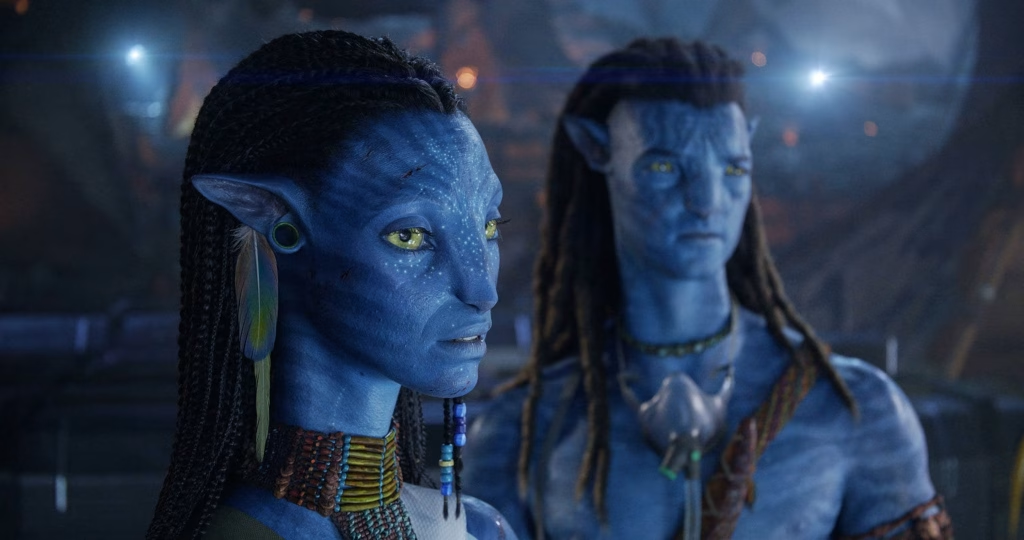
The introduction of the Ash People, led by Varang (Oona Chaplin), is where the theme gets teeth. These are Na’vi who have endured devastation and come out hardened, not enlightened. Their relationship to fire reads as philosophy and coping mechanism at once. Fire destroys, fire cleans, fire purifies, fire takes.
If you’ve ever wondered how a community that’s spiritually connected to a living world could still become aggressive or brutal, this is the movie answering you. Suffering doesn’t automatically make people wise. Sometimes it makes them protective in the ugliest ways.
Colonization Breaks Worlds, Then Offers Bargains Inside the Rubble
The human presence, with its corporate logic and military hardware, is still the engine of catastrophe. But what Fire and Ash emphasizes is the second wave of damage: the way broken ecosystems create broken alliances.
When a people lose their land, they don’t just lose resources. They lose the stories and rituals that kept them grounded. They lose the confidence that tomorrow will resemble yesterday. That kind of loss makes “deal with the invaders” start to sound like a strategy instead of a betrayal, especially if the alternative is starvation, displacement, or extinction.
That’s one of the movie’s smartest angles. The most effective colonization isn’t always brute force. It’s offering choices where every option tastes like ash, then acting shocked when someone chooses the one that keeps their kids alive.
Jake’s Leadership Looks Different When the Problem Isn’t a Clear Enemy
Jake knows how to fight a war. He’s still learning how to live inside one without turning his family into a unit. Fire and Ash puts him in situations where command instincts don’t solve the emotional mess. You can’t bark your way out of grief. You can’t strategize your way into trust.
His conflict with Miles Quaritch (Stephen Lang), now in a recom body and still fueled by obsession, keeps the pressure on. But the bigger test is internal: how does Jake guide his children without handing them a worldview built purely on paranoia?
Neytiri’s Pain Raises the Hardest Question in the Movie
Neytiri has always been fierce, but Fire and Ash frames her fierceness as something that can curdle. After loss, vengeance can start to feel like love. You tell yourself you’re honoring what you lost. You tell yourself you’re keeping your remaining family safe. And then one day you realize your children have been watching your hatred like it’s a tutorial.
The movie doesn’t need to lecture about cycles of violence. It shows the small moments where a kid learns what kinds of lives are considered disposable. It shows how quickly the word “enemy” spreads until it covers anyone who reminds you of your pain.
Kiri and Lo’Ak Represent Two Ways Kids Adapt to Collapse

Kiri’s connection to Pandora, whatever you call it, spiritual, biological, mysterious, makes her a symbol of continuity. She’s a reminder that the world is alive even when it’s wounded. But that sensitivity also makes her vulnerable. Feeling everything means you have fewer places to hide inside yourself.
Lo’ak, on the other hand, adapts through motion. He pushes forward, takes risks, tries to turn fear into action. He’s the kid who looks at an unstable world and decides stability is a myth, so he might as well learn to swim in chaos.
The Film Keeps Coming Back to One Brutal Truth
A damaged world forces moral shortcuts. People make compromises, then call them “realism.” They choose harm reduction and still feel dirty. They cling to identity because everything else is slipping.
Fire and Ash doesn’t pretend there’s a clean way through that. It suggests that inheriting a broken world means inheriting unfinished grief, unfinished wars, unfinished decisions. You don’t get to start fresh. You get to start in the middle.
And that’s why the movie sticks with you. It isn’t only about whether Pandora survives. It’s about whether the people living on it, especially the kids, can build something better than what they were handed, even when the ashes are still warm.

Rachel Sikkema is a New Zealand-based writer and creative entrepreneur who explores the intersection of film, culture, and modern relationships. Through her articles, she examines how stories shape the way we connect, love and see ourselves – all for God’s glory. When she’s not writing about film and television, she’s watching Dexter and The White Lotus for the third time.